Editorial

About the laboratory

The research field of the Brain Plasticity laboratory is the study of the molecular, cellular, anatomical and behavioral mechanisms of neuroplasticity. This theme is addressed by an integrated multidisciplinary approach, combining genetics, molecular and cellular biology, neural network studies, brain imaging, physiology and behavior.

Our laboratory brings together researchers interested in understanding the functioning of the brain at different scales, in order to develop collaborations and synergies. Complementary biological models are studied, the brain of the Drosophila (Thomas Preat & Pierre-Yves Plaçais’s team and Raouf Issa’s team), the brain of mammals (Karim Benchenane’s team, Philippe Faure & Alexandre Mourot’s team and Gisella Vetere’s team), and the human brain.

The unique situation of the Brain Plasticity laboratory, within ESPCI Paris, allows us to develop unusual and fruitful bridges between neurobiology and physics.

In the light and continuity of the study of basic mechanisms of neuroplasticity, our projects include, concretely or potentially, applications to human cerebral pathology. We are interested in psychiatric illnesses (depression, addiction, stress) (Karim Benchenane’s team and Philippe Faure & Alexandre Mourot’s team), understanding neuronal mechanisms involved in sleep physiology (Karim Benchenane’s team), understanding neural codes and brain plasticity underlying memory processes (Gisella Vetere’s team) and reinforcement learning (Philippe Faure & Alexandre Mourot’s team) or studying Genetic models in Drosophila, Alzheimer’s disease (Thomas Preat & Pierre-Yves Plaçais’s team) and movement disorders (Raouf Issa’s team). The applied nature of this work, particularly in physics and neuropathology, suggests that they may lead to valuations at the industrial level (brain-computer interface, caracterisation of molecules).



News

Le rôle social des individus n’est ni prédestiné ni figé

Dans les sociétés animales comme dans les sociétés humaines, on observe régulièrement des individus qui produisent des ressources et d’autres qui les captent. Contrairement à ce que les théories évolutives1 pouvaient jusqu’alors laisser penser, ces rôles sociaux ne sont pas uniquement dépendants de prédispositions individuelles. Au ...

Quand le cerveau « simule » la faim pour mieux apprendre

Et si notre cerveau pouvait, à notre insu, brouiller les signaux de satiété ? Dans une étude publiée dans Nature, des scientifiques montrent que chez la mouche Drosophila melanogaster, certaines expériences, notamment l’apprentissage, peuvent induire un faux état de faim. Ce mécanisme inattendu, qualifié de « leurre intéroceptif », rév...

ERC Starting grant awarded to Lauren Reynolds

Lauren Reynolds (member of the Neurophysiology and Behavior team lead by Philippe Faure and Alexandre Mourot) is the recipient of a 2025 ERC Starting Grant. Her project “DeMARRe” will investigate in a mouse model whether the natural peak of exploration and risk-taking observed in adolescence promotes resilience in adulthood by shaping the...

Brixham Foundation price to Thomas Preat

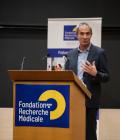
On Monday, November 15, 2021, Thomas Preat was granted with the Brixham Foundation Prize intended to support biomedical research on the brain, by a jury of the Foundation for Medical Research made up of members of the Scientific Council. The jury wished to honor Thomas Preat for his work on the plasticity of the Drosophila brain, and more...

Each year, the Jeunes Talents France program...

Each year, the Jeunes Talents France program rewards 35 talented women scientists at the PhD and post-doctoral levels. Lauren Reynolds, a post-doctoral fellow in the Neurophysiology and Behavior team (led by Philippe Faure and Alexandre Mourot) is one of the winners.

> More news...

Recent publications

An Optonanobody for Reversible Photoactivation of Recombinant and Native α7 Nicotinic Receptors

ACS Chemical Neuroscience 2026
Maria Vangelatou, Kian Stenbolt, Sylvie Bay, Karima Medjebeur, Gabriel Ayme, Pierre Lafaye, Arnaud Blondel, Laurie Peverini, Alexandre Mourot, Pierre-Jean Corringer
Abs... (...)


Deconstruction of a memory engram reveals distinct ensembles recruited at learning

Nature Neuroscience 2026
Clément Pouget, Flora Morier, Livia Autore, Nadja Treiber, Pablo Fernández García, Nina Mazza, Run Zhang, Isaiah L. Reeves, Stephen M. Winston, Mark A. Brimble, Christina... (...)


Astrocyte-to-neuron H2O2 signalling supports long-term memory formation in Drosophila and is impaired in an Alzheimer’s disease model

Nature Metabolism 2025
Rabah Y, Berwick JP, Sagar N, Pasquer L, Plaçais PY & Preat T
Abstract

Astrocytes help protect neurons from potential damage caused by reactive oxygen species (ROS).... (...)


Dopamine Builds and Reveals Reward-Associated Latent Behavioral Attractors

Nature Communications 2024
Naudé J, Sarazin MXB, Mondoloni S, Hanesse B, Vicq E, Amegandjin F, Mourot A, Faure P, Delord B.
Abstract

Phasic variations in dopamine levels are interpreted as a... (...)


Diverting glial glycolytic flux towards neurons : a memory-relevant role of CRH stress hormone signalling

Nat Commun 2024
Francés, R., Rabah, Y., Preat, T.*, and Plaçais, P.-Y.*
Abstract

An essential role of glial cells is to comply with the large and fluctuating energy needs of neurons. Metabolic... (...)


> More publications...

Top